Racing in Car 2021
- 4.6
- Rating
- 10.00M
- Installs
- Free
- Price

 Analysis by App-foxy
I spent time with Racing in Car 2021 as a quick, first-person highway racing game, and my main impression is that it understands the appeal of a simple driving loop. You get behind the wheel, enter traffic, look for openings, and try to turn a short run into a better one. It is not built around a complicated career simulation or a large set of racing rules. Its appeal comes from the pressure of staying alive in moving traffic while gradually making each attempt feel more controlled.
That simplicity makes it easy to start. I did not need a long tutorial or a large set of menus before understanding what the game wanted from me. At the same time, the straightforward design means the experience depends heavily on whether you enjoy repeating highway runs and improving your own driving rhythm. If you want dramatic races against named opponents, deep vehicle tuning, or a broad story mode, this is probably not the right kind of racing game. If you like short sessions built around concentration and small improvements, it has a clearer purpose.
How the first runs establish a reason to keep driving
The early goal is easy to understand: keep moving through traffic without losing control, then use better runs to make the next attempt more satisfying. That may sound modest, but it works because highway traffic creates an immediate decision every few seconds. I have to judge whether a gap is safe, decide whether to move around a slower vehicle, and resist the temptation to make a risky pass simply because the road looks open for a moment.
You May Also Like

 Blood Strike: 2.5 Anniversary
Blood Strike’s Loadouts Turn Every Drop Into a Tactical Gamble
A close look at Blood Strike’s custom loadouts: how fast access to signature weapons reshapes its battle royale rhythm, rewards preparation, and narrows the gap between fights.

 Pandora - Music & Podcasts
Pandora’s Music Is Easy to Start, but Harder to Recover
Pandora’s strength is its low-effort path from a seed to a station. Its weak spot is how much confidence it asks you to place in connection, setup, and quiet recovery.

 8 Ball Pool
 Is Built on Rivalries, Rematches, and Routine
A close look at the rivalries, rematches, shared routines, and unanswered safety questions that turn a quick pool match into a persistent mobile community.

 Samsung Music
’s Quiet Strength Is Playing What You Already Own
Its reach comes less from spectacle than from dependable access to a personal library. That simplicity is both the app’s strongest retention engine and its ceiling.

 AccuWeather: Weather Radar
AccuWeather Review: A Quick, Clear Forecast for Everyday Decisions
For everyday plans, the best forecast is the one you can understand quickly. AccuWeather makes rain timing, radar, and local conditions easy to act on, with a few trade-offs.

 Hill Climb Racing
Why Hill Climb Racing Still Turns Crashes Into One More Run
A tiny car, a bumpy hill and one more upgrade: Hill Climb Racing keeps resurfacing because its simple chaos makes every near-miss feel personal.
More From Our News Desk



The first few attempts are useful for learning the game’s visual language. Cars ahead are not just decoration; they are warnings about the space that will disappear in front of me. I found myself watching several vehicles ahead rather than focusing only on the nearest one. That habit matters because a gap that looks comfortable can close quickly when traffic changes pace. The game therefore creates an early objective beyond merely “drive farther”: learn to read the road before the danger reaches the front bumper.
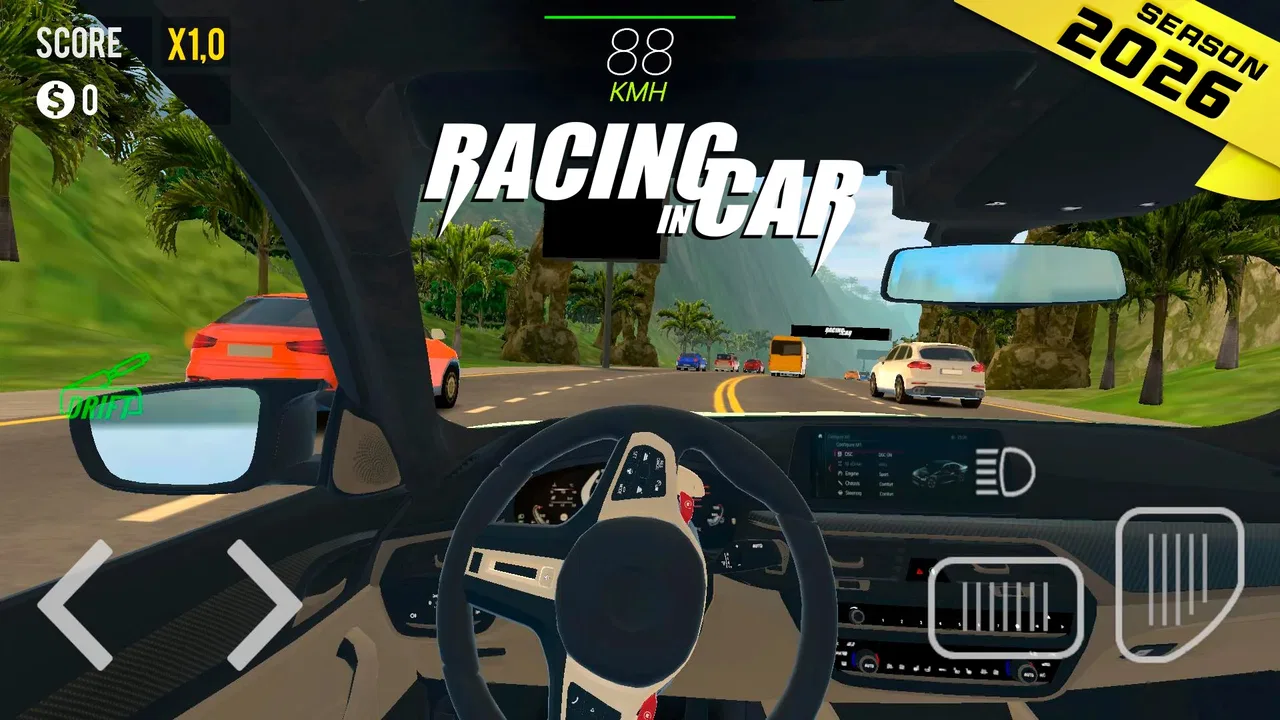
Its first-person viewpoint strengthens that feeling. I am not looking at a small car from above, so judging distance becomes part of the challenge. This perspective gives the road a more immediate presence, especially when I am threading between vehicles. It also makes mistakes feel less forgiving than they would in a top-down racer. I can see why the store presents it as a highway traffic simulator, but I would describe the experience more precisely as an accessible traffic-dodging racer with a strong cockpit-style viewpoint.
The free entry point is helpful for testing that loop. I can install it without paying upfront, try several runs, and decide whether the repeated traffic challenge suits me. The game is aimed at Everyone, which fits the uncomplicated controls and clear premise. Parents should still remember that optional purchases range from $0.99 to $39.99 per item, so the free starting point does not mean every possible part of the experience has no cost.
One useful way to approach the opening is to treat the first sessions as practice rather than as a test of reflexes. I initially wanted to move as quickly as possible, but that made me overreact to small changes in traffic. A calmer approach worked better: hold a stable line, identify the next safe opening, and only change position when the benefit is clear. This is one of the game’s less obvious strengths. It rewards anticipation more than frantic swerving.
What counts as progress when the loop is simple
Racing in Car 2021 does not need a complex narrative to give a run meaning. The progress signal comes from the quality of my driving. A longer survival streak, a cleaner series of overtakes, or a more confident response to dense traffic can make a session feel successful even when there is no dramatic finish-line moment. I noticed that I began measuring improvement through consistency: fewer panic movements, fewer unnecessary lane changes, and better timing when passing.
That kind of progress is personal rather than heavily explained. The game is most enjoyable when I set a small target before starting, such as staying patient in crowded traffic or completing a run without making a last-second correction. This turns a basic attempt into a focused exercise. Without a target, the loop can feel repetitive; with one, the same road becomes a place to test a specific skill.
The visual presentation also helps progress feel readable. The realistic-looking highway environment gives me enough road detail to make traffic decisions, and the first-person framing keeps attention on what is approaching. I would not confuse that presentation with a full simulation, since the game remains designed for quick arcade-style play, but the visual emphasis makes each close pass feel more consequential.
Another practical tip is to avoid treating every open lane as an invitation. The safest-looking route is not always the route that gives the best continuation. Moving toward a gap can leave me with fewer options if the next vehicle is already occupying the space beyond it. I had better results when I preserved an escape route instead of aiming only for the immediate overtake. That is a small change in thinking, but it makes the traffic pattern much easier to manage.
The developer, Studio WW Games, has kept the central idea visible rather than burying it under menus. That is useful for short play sessions. I can pick up the game when I have only a few minutes and understand what I am doing immediately. The trade-off is that players who need a strong sense of long-term achievement may find the progress signals too subtle unless they create their own goals.
Where the difficulty comes from
The difficulty is less about a complicated ruleset and more about maintaining attention. At low pressure, it is easy to make a lane change because the road appears open. As traffic becomes harder to read, that same habit becomes dangerous. The game encourages me to shift from reacting to the nearest car to planning around several vehicles at once. That change creates a natural learning curve even without requiring a formal lesson.
I found the most difficult moments were not always the fastest ones. Dense traffic can be more demanding than an apparently quick stretch because there is less room to recover from a poor decision. When several cars occupy nearby lanes, a small correction can create a second problem immediately afterward. The right response is often to wait, accept a slower pace, and let the road open naturally. That is a meaningful trade-off: aggressive driving may feel exciting, but patience produces more reliable runs.
Players who expect a traditional race against opponents may initially interpret this pacing as a lack of action. In my experience, the tension comes from maintaining a clean line rather than battling another driver for a corner. Compared with conventional circuit racers, this game gives me fewer dramatic moments and more repeated micro-decisions. Compared with endless traffic games, the first-person presentation makes those decisions feel more immediate and less detached.
Controls are especially important here. I recommend beginning with deliberate, small inputs instead of sweeping across the road. A sudden move may avoid one vehicle while placing the car directly in the path of another. Once I stopped trying to correct every tiny change, the driving became smoother. This is also why the game can be more demanding on a small phone screen: the visual field feels tighter, and traffic requires more concentration when the road is harder to read.
The game suits people who enjoy improving through repetition, but it may frustrate anyone looking for a forgiving arcade racer. A failed run can feel like the result of one poor judgment rather than a long strategic plan going wrong. That is fair for the format, although it means the experience depends on accepting restarts as part of the rhythm. I would not choose it for relaxed sightseeing; I would choose it when I want a focused driving challenge that begins quickly.
What keeps the sessions going, and what can push too hard
The strongest retention pressure comes from the desire to correct the last mistake. After a near miss, I often wanted another attempt immediately because I knew exactly what I should have done differently. That is a good kind of replay motivation: the game gives me a clear personal lesson without needing to explain it with a long message. The next run becomes an experiment in whether I can stay calmer at the same point of pressure.
There is also a natural “one more run” effect in the short-session format. Because the premise is understandable almost instantly, I do not feel that I am committing to a large activity. I can play briefly, stop, and return later without remembering a complicated mission structure. This makes it a reasonable choice for a commute break, a waiting room, or a few minutes before bed, provided I am comfortable with a game that asks for attention rather than relaxation.
The downside is that repetition can expose the limits of the format. If I need new locations, story developments, or a changing set of race objectives to stay interested, the traffic loop may lose its pull. The game’s appeal is strongest when I enjoy mastery of the driving itself. It is weaker when I expect constant novelty. That distinction is important before downloading, because the attractive visual style may suggest a broader racing package than the focused highway design actually provides.
Optional purchases are another point worth considering. Since the game is free to start and offers individual in-app items from $0.99 up to $39.99, I would approach the purchase layer cautiously and decide first whether the basic driving loop has lasting value for me. I would not spend simply because a difficult run made me impatient. A better rule is to play long enough to know whether the game’s core challenge is enjoyable without pressure, then treat any purchase as an optional convenience rather than a requirement for discovering the game.
For families, the Everyone content rating makes the premise approachable, but I would still set expectations around spending before handing the phone to a child. The traffic theme is easy to understand, and the controls are not intimidating, yet the presence of optional purchases means a device-level purchase check remains sensible. That is practical advice rather than a criticism of the driving itself.
Who should choose it over other racing games
I would recommend this game to someone who wants a focused highway racing game rather than a full motorsport package. It is a good fit for players who like first-person driving, repeated attempts, and the satisfaction of making fewer mistakes. It also works for people who prefer learning one clear loop instead of navigating a large campaign with many systems competing for attention.
I would point a different player toward a conventional circuit racer if they want overtaking battles with recognizable opponents, structured laps, and a clear finish line. A kart racer would be better for someone who wants power-ups and playful disruption. A deeper driving simulator would suit a player who cares about detailed car behavior, tuning, and realistic race procedures. This title sits between those extremes: more immediate than a complex simulator, but more focused and less chaotic than a party-style racer.
One everyday scenario shows where it fits best. Imagine I have ten minutes before an appointment and want something that starts without a long setup. I can play a few runs, focus on maintaining a safe lane, and stop after improving my traffic reading. I do not need to remember a story objective or wait for a multiplayer match. On the other hand, if I am looking for a long evening of varied racing content, the same short-loop structure may leave me wanting more variety.
The game has also reached a substantial audience, with over 10 million installs and a 4.7 average from around 153 thousand ratings. Those figures do not guarantee that every player will enjoy it, but they do match my impression that the premise is easy to grasp and broadly appealing. Its release on September 28, 2019, also explains why it feels like an established mobile racer rather than a brand-new experiment. The current version is 3.7.3.1, and it runs on Android 7.0 or later.
I would be careful about choosing it solely for the phrase “realistic graphics.” The visuals support immersion, especially from the road-level perspective, but the main attraction is still the traffic challenge. If graphics are your only priority, you may judge it more harshly than someone who values responsive decision-making and quick access to a run. In my view, the presentation is most effective when it serves the driving rather than trying to replace depth.
My verdict on the progression and pacing
Racing in Car 2021 succeeds when progression means becoming a more disciplined driver. Its early goals are clear, its progress signals come from cleaner and longer runs, and its difficulty grows through the need to anticipate traffic instead of reacting at the last second. The pacing is brisk enough for short sessions, yet it can become repetitive if I need frequent changes in objectives or scenery.
My biggest recommendation is to play it with a deliberate improvement goal. Try to preserve an escape lane, reduce unnecessary swerves, or wait for safer openings instead of chasing every immediate pass. Those small rules reveal more depth than simply driving as fast as possible. They also make the game feel less like a reflex test and more like a compact exercise in road awareness.
My main reservation is equally clear: this is not a substitute for a feature-heavy racing game. The focused design leaves less room for players who want a campaign, elaborate customization, or varied competitive formats. The optional purchase range also means I would keep spending controlled and judge the free driving loop on its own merits first.
For me, the final decision is positive but specific. I would recommend it to a friend who enjoys first-person traffic dodging, quick retries, and gradual improvement through repetition. I would skip it for a friend who needs constant novelty or wants wheel-to-wheel racing against a field of opponents. As a free Racing game from Studio WW Games, it earns its place through a clear idea, readable tension, and a satisfying challenge when I give each run a purpose.
FAQs for Racing in Car 2021
01What are the main features of Racing in Car 2021?
Racing in Car 2021 offers immersive 3D graphics and realistic car interiors, providing a true-to-life driving experience. Players can choose from a variety of cars and tracks, each with unique challenges. The game also features intuitive controls and dynamic traffic systems, enhancing the realism and excitement of each race.
02Is Racing in Car 2021 free to play?
Yes, Racing in Car 2021 is free to download and play. However, it does offer in-app purchases that provide additional content, such as new cars or upgrades, which can enhance gameplay. While these purchases are optional, they can help players progress more quickly through the game.
03What devices are compatible with Racing in Car 2021?
Racing in Car 2021 is available for both Android and iOS devices. It requires Android 4.1 or higher and iOS 9.0 or later. The game is optimized for smartphones and tablets, offering a seamless gaming experience across different platforms. Be sure to check your device's compatibility before downloading.
04Does Racing in Car 2021 require an internet connection?
Racing in Car 2021 primarily offers offline gameplay, allowing players to enjoy the game without an active internet connection. However, some features, such as online leaderboards or updates, may require internet access. Playing offline ensures that you can enjoy the game anywhere, anytime.
05Are there any customization options available in Racing in Car 2021?
Yes, Racing in Car 2021 allows players to customize their vehicles with various upgrades and visual modifications. From performance enhancements to aesthetic changes, players can personalize their cars to suit their preferences and improve their racing capabilities. This feature adds depth and personalization to the gaming experience.
Pros
- Immersive first-person cockpit view.
- Realistic driving physics.
- Variety of cars to choose from.
- Smooth controls enhance gameplay.
- Day and night driving modes.
Cons
- Limited track variety.
- In-app purchases can be intrusive.
- Repetitive gameplay elements.
- Occasional lag on older devices.
- Ads can interrupt gameplay.

Racing in Car 2021
Gallery